Medical Hospital Device Set of Drawings
A Designer’s First Look: Clean, Calm, and Purposefully Clinical
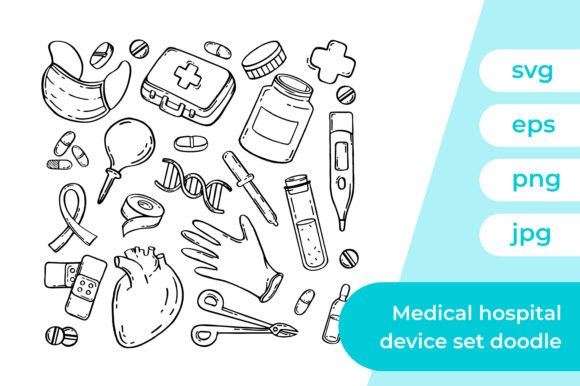
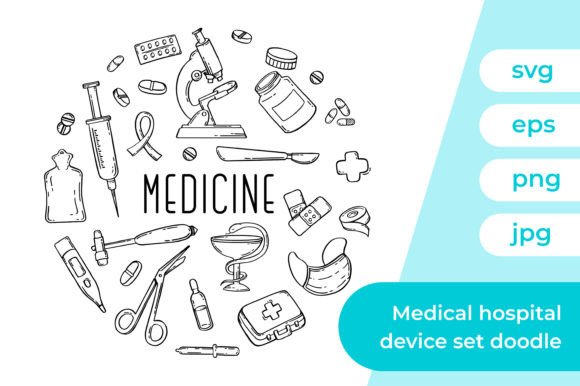
Opening the Medical Hospital Device Set of Drawings, I immediately noticed its quiet confidence—not flashy, not cartoonish, but thoughtfully restrained. These aren’t stylized icons or playful doodles; they’re hand-drawn vector illustrations of syringes, EKG waveforms, stethoscopes, pill bottles, IV bags, and lab flasks—rendered with soft line weight, subtle tapering, and gentle negative space. The mood is professional yet approachable: ideal for a nurse’s tote bag, a pediatrician’s apron, or a new parent’s baby blanket celebrating a healthcare journey. It feels like something you’d frame in a clinic waiting room—or stitch onto a gift that says “I see your work, and it matters.”
Where This Set Truly Shines in Real Embroidery Projects
I tested one of the smaller devices—a compact stethoscope outline—on a medium-weight cotton twill tote. With light tear-away stabilizer and 40-weight polyester thread, it stitched cleanly at ~3.5" wide. The hand-drawn quality translated beautifully: slight organic wobble in the tubing, delicate curve of the earpieces, no harsh corners to snag. That’s rare in medical-themed embroidery, where rigid clipart-style files often look sterile or cold.
This set works especially well for:
- Custom apparel—think crewneck sweatshirts for hospital staff appreciation gifts (avoid dense fill areas on fleece unless reducing size)
- Embroidered patches—the clean outlines hold up well when heat-sealed or sewn onto scrubs or backpacks
- Baby embroidery—a simplified EKG line or tiny pill bottle adds quiet meaning to onesies or burp cloths without overwhelming scale
- Nursery decor—framed pillow covers or tea towels where subtlety reads as warmth, not clinical distance
- Etsy listings and boutique branding—as part of a cohesive collection (e.g., “Caregiver Essentials” bundle), it lends authenticity to handmade product storytelling
Where to Proceed with Thoughtful Stitching
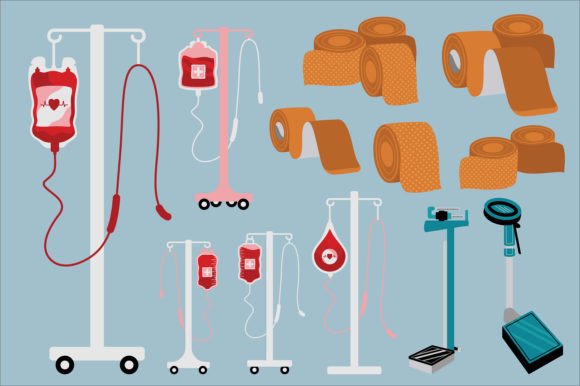
Not every device in the Medical Hospital Device Set of Drawings is equally embroidery-ready out of the box. The larger compositions—like a full IV setup with multiple connected elements—push detail density. On textured fabrics (terry cloth, heavy canvas) or stretchy knits (cotton jersey tees), those fine lines can blur or distort unless resized and simplified.
Be mindful with:
- Small hoop sizes: The syringe with detailed plunger and gradation marks needs at least a 4"x4" hoop minimum—tighter hoops risk crowding and skipped stitches
- Dark fabric: The hand-drawn lines rely on contrast. Test thread colors against navy or charcoal first; a soft ecru or heather gray thread may read better than stark white
- Curved surfaces: Caps and beanies demand flattened layout—rotate the stethoscope vertically rather than horizontally to avoid distortion near the crown seam
- Frequent-wash items: Avoid high-fill-stitch zones (e.g., solid pill capsules) on baby bibs or kitchen towels—opt for open-outline versions or running-stitch interpretations instead
What It Adds—and What It Doesn’t Promise
This isn’t a plug-and-play machine embroidery design with pre-digitized satin-stitch borders or auto-graded underlay. It’s an illustration set—Graphics, not pre-digitized embroidery files. That means you’ll need to digitize each piece yourself or hire a digitizer who understands medical aesthetics: how to preserve hand-drawn nuance while ensuring stitch stability.
What it *does* deliver is visual integrity. When stitched well, the Medical Hospital Device Set of Drawings elevates perceived value. A client ordering embroidered scrubs for their clinic doesn’t just get “a stethoscope”—they get recognition of craft, care, and intention. That builds trust faster than generic clipart ever could.
It also supports brand consistency across formats: use the same syringe vector on a printed label, a stitched patch, and a digital mockup—and the cohesion feels deliberate, not accidental.
Practical Notes from My Hoop to Your Project
Before committing to a client order or Etsy listing:
- Test on scrap fabric first—especially if using rayon thread or blending filament, which can highlight thin strokes differently than polyester
- Check stitch density in any filled elements (e.g., the circular face of a blood pressure cuff); overfilling creates stiffness and puckering on lightweight cotton
- Confirm hoop size compatibility—some devices span wider than expected; measure before hooping
- Inspect small details at 200% zoom: are connecting lines intentional or accidental breaks? Hand-drawn vectors sometimes include micro-gaps meant for illustration—not embroidery—so close those before digitizing
- Try black-and-white mockups to gauge clarity without color distraction—this reveals whether shape alone communicates the device clearly
- Compare light/dark backgrounds visually, not just digitally—print both and hold them up to natural light
- Use appropriate stabilizer: cutaway for knits, tear-away for stable wovens, and lightweight fusible for sheer fabrics like voile baby blankets
- Verify licensing before selling finished products or bundling as digital embroidery files—since this is sold as Illustrations, commercial reuse terms vary by seller
Final Thought: Meaning Over Motif
The Medical Hospital Device Set of Drawings stands out because it treats medical tools not as sterile symbols—but as quiet witnesses to human care. That makes it unusually versatile: equally fitting for a graduation gift to a med student, a “thank you” embroidered on a nurse’s lounge pillow, or a subtle logo for a holistic wellness brand. It won’t shout. But when stitched with attention—and paired with thoughtful fabric, thread, and placement—it resonates. And in handmade product markets, resonance is what turns a simple embroidered patch into a keepsake.