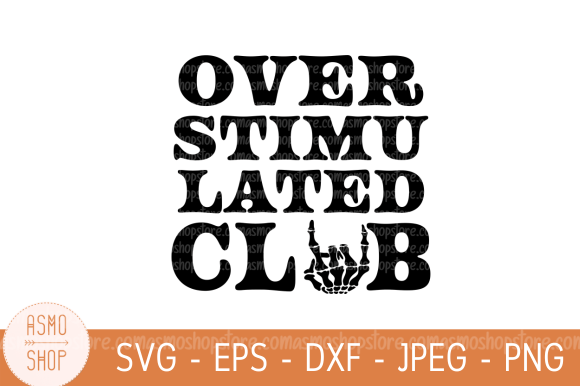
Overstimulated Nurses Club SVG
A Design That Lands—Right Where It Should
As someone who’s stitched hundreds of nurse-themed embroidery files—from delicate stethoscope motifs to bold “Nurse Life” lettering—I opened Overstimulated Nurses Club SVG expecting a wink, not a scream. What I got was something sharper: a design that balances irreverent humor with visual clarity and real-world stitchability. It doesn’t try to be cute or polished—it leans into its own energy, and that honesty makes it unusually effective for apparel and accessories aimed at actual nurses.
First Impressions: Bold, Tight, and Built for Recognition
The layout feels intentionally compact—no sprawling borders or filler flourishes. It’s centered, legible at glance, and uses strong negative space around the phrase. The typography isn’t overly decorative, but it’s weighted just right: thick enough to hold up in satin stitch, open enough to avoid thread nesting in tight curves. There’s no fine serifs or fragile ligatures—this is a machine embroidery design made for visibility, not calligraphy contests.
It reads as an Illustrations-grade graphic first, then a functional embroidery file second—which is exactly how the best commercial Graphics should behave. You can tell it wasn’t stretched from a social media meme; it was conceived with fabric and needle in mind.
Real-World Test: Embroidering It on a Heavy Cotton Tote Bag
Last week, I used Overstimulated Nurses Club SVG on a 14-oz canvas tote for a local nurse educator’s conference swag bag. No applique. No backing layers—just standard cutaway stabilizer, 40-weight polyester thread, and a 5" hoop. It stitched cleanly in under 90 seconds. The letters stayed crisp, even across the slight texture of the canvas. No puckering. No thread breaks. And when the finished tote hit the table? Nurses paused, smiled, and said, “That’s *so* me.” Not “cute,” not “funny”—recognized. That’s the difference between decoration and resonance.
Where It Shines (and Where It Needs Guardrails)
- Custom apparel: Works beautifully on sweatshirts and unisex tees—especially mid-chest or left-chest placement. The scale holds up without overwhelming the garment.
- Tote bag design & aprons: Its high-contrast shape reads instantly—even from across a hospital break room.
- Embroidered patch: Clean edges and moderate stitch density mean it’ll hold up through laundering and iron-on adhesion.
- Holiday embroidery & personalized gifts: Perfect for nurse-themed stockings, pillow covers, or “survival kit” bundles. Feels intentional, not generic.
- Etsy seller & small shop product: Stands out in listings because it avoids overused clipart tropes. Buyers associate it with authenticity—not stock imagery.
Use With Intention—Not Assumption
This isn’t a one-size-fits-all embroidery file. It demands thoughtful placement:
- Avoid tiny hoops: Below 4" diameter, the interior spacing tightens and risks stitching ambiguity—especially on textured or stretchy fabric.
- Dark fabric? Test thread color contrast first. A charcoal gray satin stitch on black cotton can vanish unless you add a subtle outline or switch to white thread.
- Baby embroidery & nursery decor: Use with care. While gentle in tone, the phrase carries adult context—best reserved for teen/adult items or lighthearted boutique branding, not infant ones.
- Caps & curved surfaces: The horizontal linearity means it stitches cleanly on structured caps—but skip it on soft, unstructured beanies unless you’re using a frame-style hoop and extra stabilizer.
- Frequent-wash items: Confirm stitch density before applying to tea towels or kitchen linens. Overly dense fills may stiffen fabric or fray faster with repeated laundering.
What It Does for Your Craft Business—Beyond the Stitch
For Etsy sellers and handmade product makers, Overstimulated Nurses Club SVG adds credibility—not just charm. When customers see this on your embroidered sweatshirt listing, they don’t think “generic nurse gift.” They think, “This shop *gets* nurses.” That builds trust faster than any description ever could.
It also elevates perceived value. Because the design avoids clipart clutter and commits to a single, confident voice, buyers are more likely to view your finished product as intentional craftsmanship—not a quick digital download slapped onto fabric.
And for creative entrepreneurs building a brand around healthcare workers? This design fits seamlessly into printable mockups, social media assets, and cohesive product lines—whether you’re selling digital embroidery files or physical embroidered patches.
Practical Designer Notes Before You Stitch
- Always test Overstimulated Nurses Club SVG on scrap fabric matching your final project’s weight and texture.
- Check thread color contrast on both light and dark backgrounds—don’t rely on screen previews alone.
- Review stitch density: if your machine flags high-density areas, consider simplifying fill stitch regions or adjusting underlay.
- Confirm hoop size compatibility—some versions may default to larger hoops unsuitable for baby clothes or cap fronts.
- Inspect small details in your embroidery software: look for stray nodes, overlapping paths, or unintended overlaps that could cause stitching errors.
- Run a black-and-white mockup to assess readability—this design lives or dies by legibility.
- Use appropriate stabilizer: cutaway for knits, tearaway for stable wovens, and fusible + cutaway for lightweight or sheer fabrics.
- Verify licensing terms before selling finished products or bundling the file commercially—this is critical for craft business compliance.
Final Thought: Humor That Holds Up Under Thread
Not every funny embroidery file survives the jump from screen to stitch. Some lose punch. Some get muddy. Some just feel like inside jokes nobody else hears. Overstimulated Nurses Club SVG avoids all those pitfalls. It’s sharp, scalable, and sincere—not trying to please everyone, but speaking clearly to the people who need it most. Whether you’re embroidering a last-minute graduation gift or building a full nurse-themed collection for your small shop, this is a design that earns its place in your embroidery project queue—and stays there.