Nurse Drug Dealer: A Real-World Embroidery Review
Let’s be direct: Nurse Drug Dealer isn’t a design you’ll casually toss onto a baby onesie or a boutique apron without thinking. As someone who’s stitched hundreds of custom embroidery projects—from Etsy shop bestsellers to local café staff uniforms—I opened this file with equal parts curiosity and caution. The name alone sets a tone, and the first impression matters more than most designers admit.
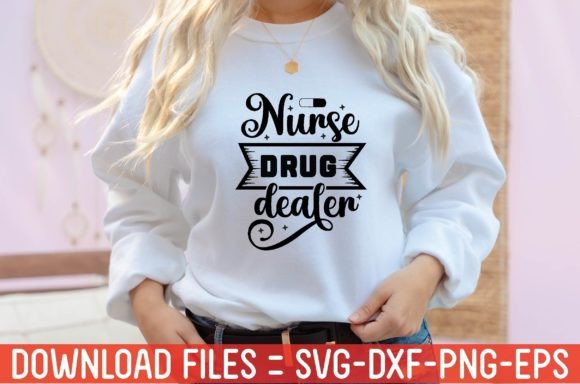
Visually, Nurse Drug Dealer lands with bold, graphic confidence. It reads as a stylized, tongue-in-cheek illustration—clean lines, strong silhouette, intentional negative space. The SVG vector holds crisp edges, the PNG renders cleanly at 300 dpi with transparent background (a must for mockups), and the DXF is usable if you’re converting for CNC or laser prep—but for embroidery, it’s the vector’s scalability that gives flexibility. That said, this isn’t a delicate floral monogram or a minimalist script. It’s got attitude, rhythm, and visual weight—ideal for a custom embroidered tote bag heading to a nursing conference, or a limited-run sweatshirt for a medical school grad crew.
I tested Nurse Drug Dealer on midweight cotton twill (for a patch) and 100% combed ring-spun cotton (for a relaxed-fit tee). On both, the design held up well—but only after thoughtful prep. Its layout leans horizontal, so hoop size matters. If you’re stitching it on a cap, expect to reposition or split the design unless your machine supports large hoops or multi-position framing. And while the lettering is legible in the vector, tiny serifs or tight internal spacing won’t translate cleanly in satin stitch at under 2.5 inches wide. I’d recommend minimum 3.5" width for clear readability in fill and outline stitches.
Where Nurse Drug Dealer shines is in context-aware applications: a black canvas tote for a nurse-led wellness pop-up, a navy sweatshirt for a hospital fundraising team, or even a tea towel in a med-school-themed kitchen set. It’s not “cute.” It’s confident, slightly irreverent, and unmistakably niche—which is exactly why it works for small shops and craft fairs targeting specific audiences. Buyers who connect with the humor or insider energy will value the authenticity. But that also means it’s not universal. Don’t default it onto kids’ apparel, nursery decor, or corporate-branded merchandise without vetting audience alignment first.
Stitch-wise, the design avoids excessive density—no swampy fill zones that’ll pucker thin fabric or overwhelm lightweight stabilizer. That’s a win for t-shirt embroidery, especially on stretchy blends. Still, test on scrap first: run a sample with your preferred thread colors (I used matte black on charcoal and high-contrast white on navy) and check how the outlines hold on curved surfaces like sleeves or pillow covers. The design’s clean contours respond well to proper cutaway stabilizer on knits, but skip the tear-away if you’re stitching on terrycloth towels or textured baby blankets—the backing needs support, not sacrifice.
One real-life moment crystallized its fit: I mocked up Nurse Drug Dealer on a cream linen apron for a local apothecary café’s staff gift set. Paired with a simple cross-stitch herb motif on the pocket, it added personality without clashing. Customers noticed. Nurses stopped by just to ask where it was from. That’s the sweet spot—when a design sparks recognition *and* respect, not just a chuckle. It says something about the wearer, and by extension, the maker behind the product.
That said, use care on dark fabrics with light thread—some fine interior details can blur without careful stitch planning. And avoid dense decorative accents (like heavy puff or metallic overlays) unless you’ve confirmed the base layout can carry the extra dimension. This isn’t an applique design begging for layers; it’s strongest when executed cleanly, with intentionality in thread choice and fabric pairing.
For Etsy sellers and handmade shop owners: Nurse Drug Dealer performs well as a digital embroidery file in listings—especially when paired with realistic printable mockups showing it on a unisex sweatshirt or structured tote. Buyers respond to specificity. Show it stitched, not just layered over a blank template. And always clarify licensing upfront. The product description confirms you receive SVG, DXF, and PNG files—but doesn’t state commercial use rights. Before listing finished embroidered patches or reselling the digital file itself, verify permissions. Your reputation hinges on transparency, not assumptions.
As a machine embroidery design, Nurse Drug Dealer delivers what it promises: a sharp, scalable graphic built for impact. It won’t replace your go-to script monogram or vintage botanical set—but it fills a distinct gap in T-Shirt Designs and Graphics aimed at professionals who wear their identity proudly. Its strength lies in clarity of voice, not complexity of execution. That makes it unusually versatile for custom apparel, holiday embroidery (think “Nurses’ Night Out” gift bundles), and small-batch boutique branding—if you match it to the right product, audience, and intent.
A few practical notes before you stitch:
- Test the design on scrap fabric matching your final project’s weight and stretch
- Check thread color contrast on both light and dark backgrounds—what reads bold on screen may fade on garment dye lots
- Review stitch density in your embroidery software; adjust if needed for textured or delicate fabrics
- Confirm hoop size compatibility, especially for curved surfaces like caps or baby hats
- Inspect small corners and interior negative space—these often need manual cleanup for smooth satin stitch transitions
- Use proper stabilizer: cutaway for knits, medium-weight tear-away for stable wovens, and fusible for lightweight linens
- Always test black-and-white mockups—color isn’t required for recognition, but clarity is
- Verify licensing terms before selling finished products or digital embroidery files commercially
In short: Nurse Drug Dealer is a focused, well-built design—not for every project, but invaluable for the right one. It rewards thoughtful application, respects the craft behind embroidery, and connects with buyers who appreciate wit, professionalism, and a little well-placed edge. Use it like a signature—not a stamp.