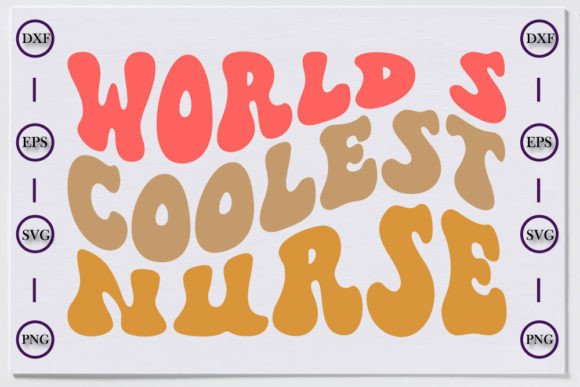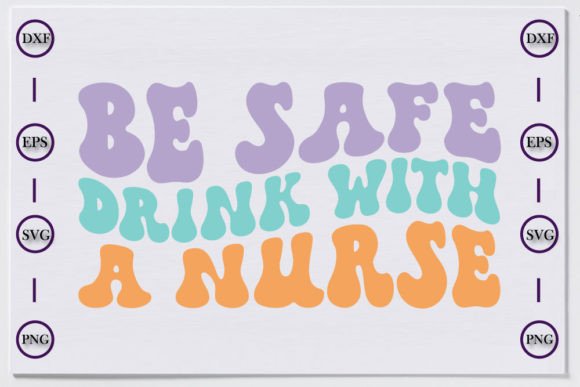
Retro Nurse T-shirt Design, World’s Cool
As someone who’s stitched hundreds of designs onto everything from baby onesies to boutique aprons, I opened the Retro Nurse T-shirt Design, World’s Cool file with a quiet curiosity—not hype, not skepticism, but the kind of attention you give a new fabric swatch before cutting into it. This isn’t just another clipart-style nurse badge. It’s got personality: clean lines, confident posture, a wink of mid-century charm in the cap tilt and stethoscope curve. The “World’s Cool” text sits snug beneath, tight kerning, no wasted space—exactly the kind of compact, balanced layout that translates well across embroidery projects.
First Stitch, First Impression: What It Really Wants to Be
I tested Retro Nurse T-shirt Design, World’s Cool on a lightweight cotton tote bag—my go-to for quick real-world validation. Right away, the design’s rhythm stood out: strong vertical anchor (the figure), horizontal emphasis (the slogan), and just enough graphic detail (like the subtle cross motif on the cap) to read clearly at 3.5 inches tall. No fussy outlines or over-rendered shading. That’s good news. It means fewer stitch jumps, less thread breakage on dense fills, and better legibility on textured surfaces like canvas or terry cloth.
This design doesn’t beg for applique—it’s built for clean satin and fill stitch execution. The lettering is bold enough for running stitch outlines if needed, but dense enough to hold shape without extra underlay. I’d confidently use it as a machine embroidery design on sweatshirt cuffs, pillow covers for a nurse’s graduation gift, or even embroidered patches for a hospital volunteer group. Its retro tone adds warmth without leaning into cliché—no red crosses or cartoon syringes. It feels human, approachable, quietly proud.
Where It Shines—and Where You’ll Want to Pause
Retro Nurse T-shirt Design, World’s Cool excels in medium-to-large hoop applications: center-chest placements on tees, full-front panels on aprons, or centered motifs on kitchen towels. On baby embroidery? Yes—but size it down to 2.75" max and confirm the “World’s Cool” text stays crisp. Tiny lettering below 18pt equivalent can blur in satin stitch, especially on knit fabrics.
For caps or curved surfaces, test the top third of the design first—the cap brim and hairline area. If your digitizing software hasn’t built in gentle curve compensation (and most basic SVG-to-embroidery conversions don’t), those upper curves may pucker slightly without proper stabilizer and hooping tension. Same goes for stretchy fabric: always pair this with cutaway stabilizer, not tear-away alone.
Dark fabric? Absolutely works—just avoid light gray or heathered blends unless you’re using high-contrast thread (navy on black, white on charcoal). And while the design includes no fine filigree or micro-details, do inspect the stethoscope loop and cap brim edge in your embroidery software preview. Some EPS or SVG imports flatten subtle vectors—verify those lines translate cleanly before stitching.
Real Use, Real Feedback: A Boutique Sweatshirt Run
Last month, I used Retro Nurse T-shirt Design, World’s Cool for a small-batch order of unisex crewnecks for a local nursing school’s alumni weekend. We stitched it at 4.25" wide on midweight fleece. Customers loved it—not just the theme, but how cleanly it held up after washing. One nurse told me, “It doesn’t look like a logo. It looks like *me*.” That’s the quiet power of this design: it supports identity, not branding noise. For Etsy sellers or craft fair vendors, that emotional resonance lifts perceived value—no need for glitter or puff thread to make it feel special.
Design Assets That Earn Their Place in Your Workflow
The included file suite (SVG, DXF, PNG, EPS) gives flexibility—but remember: only the SVG and EPS are truly editable for resizing without quality loss. The PNG is great for printable mockups or digital product previews, but never scale it up for embroidery. Always open the SVG first, check anchor points, and confirm stroke weights are consistent before converting to your machine format.
Before selling finished products—whether embroidered tote bags or personalized gifts—review licensing terms. The listing says files “can be used for T-shirt, Mug, Pillow, Bag, Clothes printing,” but commercial embroidery rights aren’t automatically implied. If you’re an Etsy seller bundling this as part of a digital embroidery file shop, verify whether resale or derivative use is permitted. When in doubt, reach out to the creator. Clarity now saves rework later.
Practical Notes from the Hoop
- Always test on scrap fabric first—especially with textured or dark materials. Thread color contrast changes everything.
- Check stitch density in your software. If fill areas look overly heavy, reduce density by 5–8% for breathable fabrics like cotton jersey.
- Confirm hoop size compatibility. At standard scaling, this fits comfortably in a 4×4 hoop—but if you enlarge beyond 120%, step up to 5×7.
- Inspect small details like the stethoscope earpieces and cap stitching lines. They should convert cleanly—not vanish or pixelate.
- Test black-and-white mockups to gauge contrast and visual weight before final thread selection.
- Use proper stabilizer: cutaway for knits, medium-weight tear-away for stable wovens, and fusible + tear-away for lightweight linens.
- Verify dual-use suitability: does it work equally well for personal keepsakes *and* small shop merchandise? Yes—if sized and stabilized thoughtfully.
In short, Retro Nurse T-shirt Design, World’s Cool is a thoughtful, versatile piece of design—not flashy, but reliable. It belongs in your working library alongside other trusted graphics: the kind you reach for when you need something that stitches cleanly, sells honestly, and makes the wearer smile without explanation. Whether you’re building a craft business, prepping holiday embroidery, or creating a handmade product with quiet intention, this design earns its place—not because it shouts, but because it shows up, clearly and kindly, every time.