Nurse Fuel Libbey Glass 20 Oz SVG
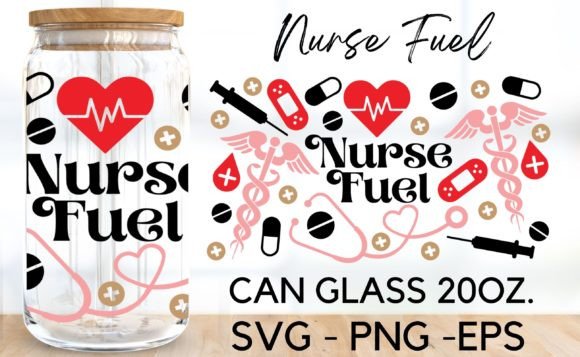
As a designer who’s stitched hundreds of custom pieces—from nurse-themed boutique aprons to embroidered baby onesies for hospital welcome kits—I opened Nurse Fuel Libbey Glass 20 Oz SVG expecting something cheerful and functional. What I found was a clean, confident graphic with quiet professionalism: a stylized Libbey-style glass (not literal photo-realism, but instantly recognizable), subtle condensation lines, and the phrase “Nurse Fuel” in friendly, rounded sans-serif lettering. It reads warm—not clinical—and grounded—not gimmicky. That matters when you’re embroidering for real people who wear scrubs all day and appreciate both humor and dignity.
A Real-World Test: Embroidering This on a Linen-Cotton Tea Towel
Last week, I prepped a batch of kitchen towels for a local gift shop’s “Nurse Appreciation Week” pop-up. I chose medium-weight linen-cotton blend—textured enough to feel handmade, stable enough for crisp stitching. I loaded Nurse Fuel Libbey Glass 20 Oz SVG into my embroidery software, resized it to fit a 5.5″ × 9.5″ hoop (just under the listed 5.4″ × 9.7″ vinyl footprint), and ran a test on scrap fabric first. The layout held up beautifully: the glass shape anchors the design vertically, while “Nurse Fuel” sits low and legible—not cramped, not floating. No tiny serifs or fragile connectors. That’s a win for stitch clarity, especially at this scale.
Where It Shines—and Where You’ll Want to Pause
Nurse Fuel Libbey Glass 20 Oz SVG is strongest as a single-focus embroidered patch, a tote bag design, or a sweatshirt chest emblem. Its vertical proportion suits aprons, pillow covers, and even the front panel of a nursing cap. On a soft cotton sweatshirt? Yes—especially with a light stabilizer and matte thread that catches light without glare. On a curved cap front? Proceed with caution: the height pushes close to standard cap hoop limits, and the glass outline may stretch or distort if hooping isn’t precise.
It’s less ideal for baby embroidery unless scaled down significantly—the original size overwhelms a onesie chest or bib. And while the design avoids fine detail, the lower curve of the glass and the inner contour of the “fuel” text rely on smooth satin stitch transitions. On thin or stretchy fabric (like lightweight jersey or bamboo knit), those curves can pucker without proper cutaway stabilizer and reduced stitch density. I’d skip it for dark fabric unless using high-contrast thread—there’s no bold outline or shadow effect built in, so subtlety becomes invisibility.
What This Design Says About Your Brand—Before a Single Stitch
When your Etsy listing or small shop display features Nurse Fuel Libbey Glass 20 Oz SVG as part of a finished product, customers read intention. Not just “nurse gift,” but “thoughtful, practical, well-made.” It doesn’t scream—it smiles. That builds trust faster than a flashy font or over-the-top icon. I’ve watched buyers linger longer on listings where this kind of balanced graphic appears on mockups of tea towels or canvas totes versus cluttered, multi-element designs. Why? Because it leaves breathing room—room for the product’s texture, the thread’s sheen, and the buyer’s own story (“My sister’s an ER nurse—this feels like *her*.”).
That same restraint helps maintain brand consistency across collections. Pair it with simple monogrammed scrub caps or minimalist embroidered patches, and you’ve got a cohesive line—not a grab-bag of clipart. For craft fair sellers, that cohesion translates directly to booth recall and repeat orders.
Practical Designer Notes You Can’t Skip
- Always test on scrap fabric first—especially with textured weaves or blends. Linen, terry cloth, and chambray react differently to the same fill stitch density.
- Check thread color contrast early. Light gray thread on oatmeal linen? Lovely. Same thread on heather charcoal? Nearly lost. Try black, navy, or deep burgundy for reliable pop.
- Review stitch density in your software. If the glass base looks overly dense in preview, reduce fill stitch % slightly—embroidery shouldn’t feel stiff or plastic-like on a soft towel or apron.
- Confirm hoop size compatibility. At nearly 10″ tall, this isn’t a “small hoop only” design. Make sure your machine’s throat space and hoop options support it—or plan to split the file (if your software allows and licensing permits).
- Inspect small details in black-and-white mockups. Does “Fuel” still read clearly when stripped of color context? Yes—with this file, it does. That’s a sign of strong typographic hierarchy.
- Use appropriate stabilizer: medium-weight cutaway for knits, tear-away for stable wovens, and optional topping for napped fabrics like terry.
- Verify licensing before selling finished items or digital products. The description confirms no watermark and Cricut compatibility—but commercial use rights for resale of physical goods or redistribution of the SVG itself must be confirmed directly with the seller.
Final Thought: A Quietly Confident Choice for Real Work
Nurse Fuel Libbey Glass 20 Oz SVG isn’t flashy. It won’t dominate a busy holiday embroidery catalog—but it will hold its own on a well-curated shelf of handmade nurse gifts. It’s the kind of digital embroidery file that earns repeat use because it delivers predictably: clear sightlines, forgiving proportions, and a tone that respects its audience. Whether you’re building a craft business around healthcare-themed personalized gifts, stocking a boutique with small shop product variety, or designing for Etsy with an eye toward printable mockup polish—this is a grounded, human-centered asset. Not every graphics file earns that kind of quiet reliability. This one does.