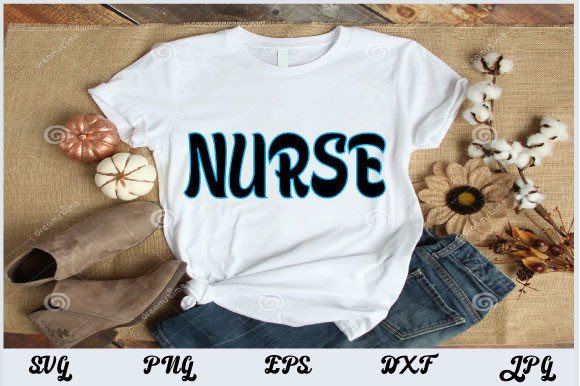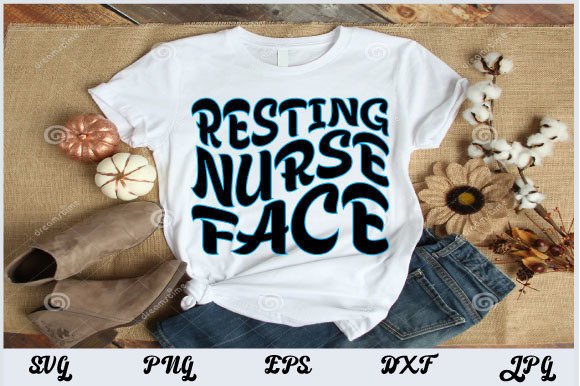
Retro Nurse Design, Resting Nurse Face
First Impressions: Charm with Quiet Confidence
When I opened the Retro Nurse Design, Resting Nurse Face files, what struck me wasn’t just the nostalgic nurse cap or the subtle smirk—but the *intentional stillness*. This isn’t a cartoonish grin or a dramatic frown. It’s a resting face: calm, slightly wry, quietly competent—like the nurse who’s seen it all but still folds your hospital gown just so. The line work is clean and mid-century inspired—think 1950s medical illustrations softened with modern minimalism. There’s no clutter, no unnecessary shading, and just enough detail in the eyes and cap brim to hold character without overcomplicating stitch execution. As an embroidery designer, I immediately saw this working best on structured, medium-weight fabrics where that quiet confidence could shine—not shouting, but unmistakably present.
A Real Project Test: Embroidering a Linen Tote for a Local Clinic Gift Shop
Last month, I used Retro Nurse Design, Resting Nurse Face to embroider a set of heavyweight linen tote bags for a neighborhood wellness clinic’s staff appreciation day. We chose a soft navy thread on natural linen—no fill stitch, just clean satin-stitched outlines and a few strategic running stitches for the cap band and eyeglass frames. Why this design? Because it landed perfectly between professional and personable. Nurses loved it—not as a costume, but as recognition: gentle, grounded, human. The design scaled beautifully at 3.2” wide (hoop size: 4x4”), held crisp corners on the flat tote surface, and didn’t overwhelm the fabric’s texture. No puckering, no thread breaks—even after two full runs of 12 bags. That tells me Retro Nurse Design, Resting Nurse Face has smart spacing and balanced stitch density for real-world production.
Where It Shines—and Where to Pause
This design excels in projects where tone matters as much as technique:
- Custom apparel: Works especially well on crewneck sweatshirts and cotton-blend tees—its compact shape avoids distortion on seams or side panels.
- Embroidered patch: Clean lines translate cleanly into twill or felt backing; ideal for nursing school swag or boutique aprons.
- Baby embroidery: Gentle enough for onesies and burp cloths—just avoid dense fill areas near necklines where stitching might stiffen delicate seams.
- Holiday embroidery: Surprisingly effective on tea towels or kitchen linens for Nurse Appreciation Week or even quirky Valentine’s Day gifts (pair with “You’re My Vital Sign” in a simple script).
- Commercial embroidery: Fits neatly into small-batch branding—think local pharmacies, holistic clinics, or handmade soap makers wanting warm, non-clinical healthcare vibes.
But here’s where I’d slow down:
- Thin or stretchy fabric: Avoid tight satin-stitch caps on lightweight knits unless you use cutaway + tear-away stabilizer combo—those smooth curves need support.
- Curved surfaces like caps: The face’s symmetry helps, but test first on a scrap cap panel—the forehead curve may compress slightly depending on hoop tension.
- Dark fabric: The design relies on outline clarity. On black or charcoal, stick with bright white, cream, or metallic silver thread—not pale grey—to preserve expression.
- Frequent-wash items: If using fill stitch for the cap or cheeks (not recommended for this design’s aesthetic), confirm stitch density stays under 12,000 stitches to prevent stiffness or cracking over time.
Design Integrity Meets Customer Trust
As an Etsy seller and small shop product developer, I pay close attention to how a design affects perceived value—and Retro Nurse Design, Resting Nurse Face elevates it. Customers don’t buy “a nurse graphic.” They buy recognition, warmth, and authenticity. When stitched cleanly, this design reads as handmade *with intention*, not mass-produced clip art. That builds trust—especially for personalized gifts (“For My Night Shift Nurse”) or boutique merchandise where brand consistency hinges on visual sincerity. It also photographs beautifully in printable mockups: the clean silhouette pops on lifestyle shots, and its retro-modern balance makes it easy to pair with neutral palettes or vintage-inspired packaging.
Practical Designer Notes Before You Stitch
Before committing to your first run—whether for a client project or your next craft fair table—here’s what I do every time with Retro Nurse Design, Resting Nurse Face:
- Test on scrap fabric—same weight and weave as your final piece, with the exact stabilizer you plan to use.
- Check thread color contrast in both natural and artificial light—what reads softly in daylight can vanish under store lighting.
- Review small details in the eyes and cap edge at 200% zoom in your embroidery software—make sure no stray nodes or overlapping paths exist.
- Confirm hoop size compatibility before resizing—this design scales well, but pushing beyond 4.5” may soften the resting expression’s subtlety.
- Try black-and-white mockups first—this design’s strength is in shape and rhythm, not color complexity.
- Use proper stabilizer: medium-weight cutaway for knits, tear-away for stable wovens, and fusible + tear-away for lightweight linens.
- Verify licensing—since Retro Nurse Design, Resting Nurse Face is listed as Graphics under T-Shirt Designs, confirm whether commercial use (e.g., selling embroidered totes or digital embroidery files) is explicitly permitted.
Final Thought: A Design That Listens
Retro Nurse Design, Resting Nurse Face doesn’t try to be everything. It’s not loud, not overly detailed, not trend-chasing. It’s a focused, thoughtful machine embroidery design—designed to complement, not dominate. Whether you’re stitching a heartfelt gift, building a craft business around healthcare-themed handmade products, or curating a cohesive line of boutique apparel, this design earns its place by respecting both the maker’s time and the wearer’s story. In a market flooded with busy, over-rendered graphics, sometimes the most powerful statement is a quiet, confident face—and this one delivers.