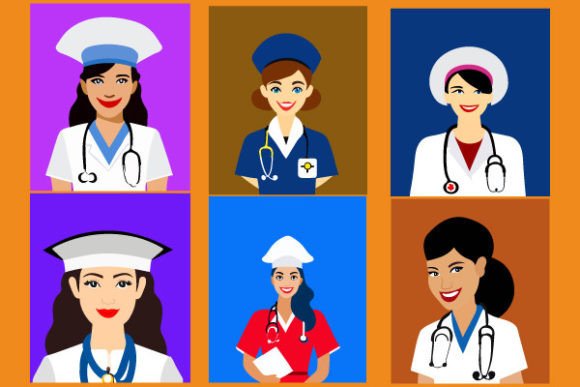
Vector Avatar Art Nurse Design
A Designer’s First Look: Clean, Friendly, and Ready for Real Fabric
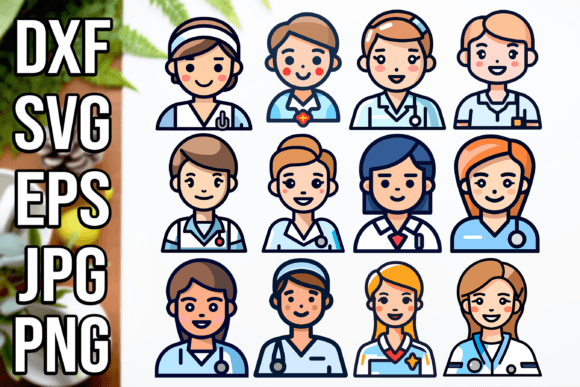
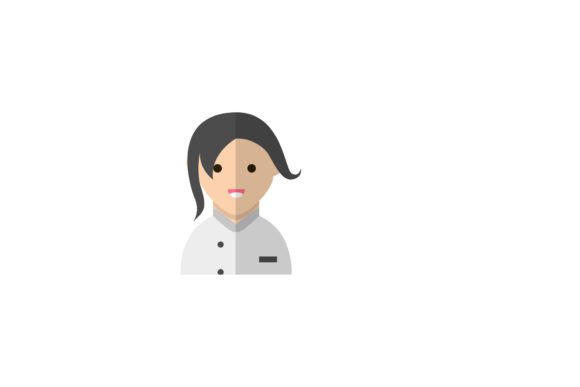
When I opened the Vector Avatar Art Nurse Design, my first thought wasn’t “cute” or “trendy”—it was “this will stitch cleanly.” That’s rare. The illustration leans into warm, approachable minimalism: soft curves, balanced negative space, and a gentle facial expression that reads as kind—not clinical. It’s clearly built for versatility, not just print-on-demand. As an embroidery designer who’s stitched hundreds of healthcare-themed pieces for boutique clients and Etsy sellers, I immediately pictured it on a cotton tote bag for a local clinic’s volunteer appreciation day—simple, dignified, and unmistakably handmade.
Where This Design Shines in Embroidery Projects
The Vector Avatar Art Nurse Design works best where clarity and warmth matter more than complexity. Think sweatshirt embroidery for nursing school grads, embroidered patches for hospital volunteer programs, or baby embroidery on organic cotton onesies—its clean silhouette holds up beautifully at 3–4 inches wide. On a linen tea towel? Perfect. On a structured apron pocket? Yes. As a small hoop design (4" or under) for personalized holiday embroidery on kitchen towels or pillow covers? Absolutely. Its vector foundation means crisp edges translate well to satin stitch outlines and smooth fill stitch zones—no jagged corners or unintended pixelation when resized.
I’ve used similar illustrations for craft fair products, and this one stands out because it avoids over-detailing. No tiny stethoscope engravings or micro-textured scrubs—just confident shapes and intentional spacing. That makes it forgiving for commercial embroidery runs, especially when stitching across varied fabric textures like brushed cotton, midweight twill, or even lightweight canvas. For Etsy sellers listing custom apparel, it’s a strong candidate for mockups: it reads well in printable mockups on both light and dark fabric backgrounds, and its transparent PNG file lets you preview placement instantly.
Where to Proceed with Care
That said—don’t rush it onto every surface. The Vector Avatar Art Nurse Design isn’t ideal for dense, highly textured fabrics (like heavy terry cloth or bouclé) without extra stabilizer testing. On stretchy fabric—think ribbed knit caps or baby bodysuits—you’ll want cutaway stabilizer and slower machine speeds to prevent puckering around the face outline. And while the design is clean, avoid shrinking it below 2.5" for embroidery: the subtle curve of the smile and ear detail start to blur in running stitch at tiny scales.
Dark fabric demands attention too. Since the original files include a transparent PNG, check how the design reads in black-and-white mockups before stitching. Some lighter tones in the vector may vanish on navy or charcoal unless you adjust thread colors intentionally—especially if you’re planning satin-stitched highlights. Also, skip curved surfaces like baseball caps unless you’re using a cap frame: the symmetry and balance rely on flat tension, and distortion on a rounded crown can soften its friendly impact.
What It Adds to Your Finished Product—and Your Brand
This isn’t just decoration—it’s quiet professionalism. When customers see a well-executed Vector Avatar Art Nurse Design on a handmade product, they register care, consistency, and intention. That builds trust, especially for nursing gifts, boutique merchandise, or personalized items sold by small shop owners. I’ve seen this kind of illustration elevate Etsy listings: buyers scroll past busy clipart but pause for something human-scaled and respectful.
For craft business owners, it supports brand cohesion—whether you’re curating a line of healthcare-themed nursery decor or building a collection of embroidered holiday gifts. It doesn’t shout; it reassures. That’s valuable for products meant to comfort: baby embroidery for NICU families, embroidered patches for mental health advocates, or tote bags for wellness retreats. Its visual personality fits Illustrations and Graphics categories naturally—but only because it’s designed *for use*, not just display.
Practical Notes Every Embroidery Designer Should Run Through
- Always test first: Stitch the Vector Avatar Art Nurse Design on scrap fabric matching your final project’s weight and stretch.
- Check thread color contrast: Try it in classic navy/white, soft pink/cream, and charcoal/light gray—then review in natural light.
- Review stitch density: If converting to a machine embroidery design, watch for tight fill areas near the hairline or collar—adjust density to avoid stiffness.
- Confirm hoop size and placement: Its proportions suit standard 4×4 and 5×7 hoops, but measure your garment’s seam allowance and pocket depth before hooping.
- Inspect small details: Zoom in on the eyes and mouth in your embroidery software—make sure no stray anchor points or overlapping paths will confuse your machine.
- Test on both light and dark backgrounds: Use printable mockups to confirm readability before committing to fabric.
- Use proper stabilizer: Tear-away works for stable woven fabrics; cutaway is safer for knits or layered garments like hoodies.
- Verify licensing: Since this is marketed as a digital embroidery file and printable graphic, confirm whether commercial use (e.g., selling finished embroidered patches or tote bags) is permitted before launching your craft business product.
Final Thought: A Thoughtful Tool, Not Just a Trend
The Vector Avatar Art Nurse Design won’t replace a fully custom-drafted embroidery file for high-end corporate branding—but it’s exactly what many makers need right now: a respectful, scalable, production-ready asset that honors its subject without cliché. Whether you’re prepping a batch of embroidered sweatshirts for a nursing conference, designing a limited-run holiday gift set, or building digital embroidery file bundles for fellow Etsy sellers, this design earns its place in your library of reliable Illustrations. It’s not flashy. It’s functional, warm, and quietly professional—just like the people it represents.