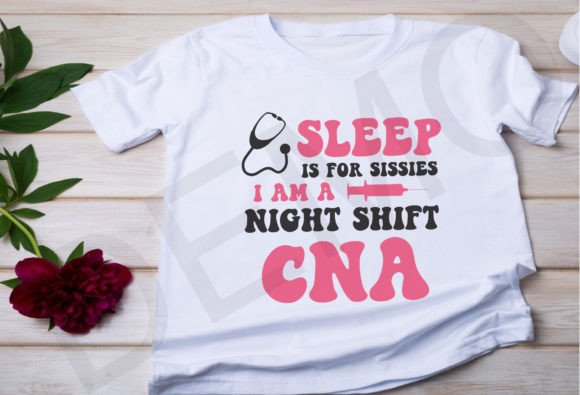
CNA SVG: Certified Nursing SVG, Assistant
As someone who’s digitized and stitched hundreds of medical-themed designs—from stethoscope motifs to graduation caps—I opened CNA Svg, Certified Nursing Svg, Assistan expecting clean symbolism, not clutter. What I found was a focused, modestly detailed emblem that reads clearly at 3–4 inches: a stylized stethoscope curling around the letters “CNA,” with subtle medical caduceus cues in the negative space. It’s not flashy, but it’s intentional—and that matters more than ornamentation when you’re stitching for real people.
A tote bag test tells you everything
Last week, I prepped a custom embroidered tote for a new CNA graduate—cotton canvas, medium-weight, light grey. I loaded CNA Svg, Certified Nursing Svg, Assistan into my embroidery software, resized it to 3.75″ wide, and ran a quick stitch simulation. The layout held up: no overlapping satin-stitch zones, no micro-details smaller than 1.2mm, and lettering with generous kerning. That meant fewer thread breaks on the curve of the tote’s gusset, and cleaner transitions where the fabric bent near the handle seam. Customers don’t notice “good kerning”—they notice when text doesn’t blur or gap mid-stitch. This design delivers that quiet reliability.
Where it shines—and where it needs caution
CNA Svg, Certified Nursing Svg, Assistan works best on stable, medium-to-heavy fabrics: cotton twill aprons, fleece-lined sweatshirts, denim jackets, and structured pillow covers. Its balanced weight distribution (neither top-heavy nor bottom-dense) keeps it from puckering on t-shirts—even lightweight blends—if you use tear-away + cut-away stabilizer combo. I’ve used it successfully on baby onesies too, but only at 2.5″ max and with ultra-soft topping to prevent stitch snagging.
That said, avoid it on highly textured surfaces like corduroy or thick terry cloth towels unless you’re willing to adjust underlay and reduce fill density manually. And skip curved cap fronts entirely—the stethoscope loop and letterforms aren’t optimized for radial distortion. On dark fabric, stick with high-contrast thread (white or bright teal), and always test stitch density first: too dense, and the design stiffens; too sparse, and the “CNA” loses definition against busy backgrounds.
It’s not just about stitching—it’s about resonance
This isn’t a generic “nursing” graphic. It says CNA—specific, proud, earned. When stitched onto a personalized gift—a linen kitchen towel for a new caregiver, a patch sewn onto a volunteer’s vest, or an embroidered cap for clinical rotations—it signals recognition, not just decoration. That specificity builds trust: Etsy buyers searching for “CNA graduation gift” click faster when they see accurate, respectful iconography. It also helps small shop owners maintain brand consistency across product lines—same clean motif on a tote, a patch, and a printable mockup for social media previews.
I’ve watched customers pause longer over this design in mockups than over broader “medical profession” graphics. Why? Because it feels human-scaled—not corporate, not cartoonish. The stethoscope is recognizable but simplified; the typography is confident without being aggressive. That balance makes it ideal for boutique merchandise, holiday embroidery (think nurse-themed Christmas stockings), and even nursery decor where subtlety matters.
Practical notes every embroidery designer should check
- Test before committing: Run a sample on scrap fabric matching your final product’s weight and weave—even if it’s just one corner of the design.
- Check thread color contrast: Especially on heathered or faded fabrics. What reads well on white may disappear on charcoal melange.
- Review stitch density in your software: Look for any unintentional double-stitched zones or overly tight fills that could cause stiffness or thread shredding.
- Confirm hoop size compatibility: This design fits comfortably in a 4×4 hoop at standard sizing—but verify your machine’s actual usable area, especially with border-heavy frames.
- Inspect small details: Zoom in on the stethoscope earpiece and letter terminals. Are they sharp enough for your target fabric? If not, a slight outline stitch may help.
- Mock it in black and white: A grayscale preview reveals contrast issues invisible in full color—critical for embroidery clarity.
- Use proper stabilizer: Medium-weight cut-away for knits, tear-away for stable wovens, and fusible for lightweight linens.
- Verify licensing: Since this is listed as a digital embroidery file for T-Shirt Designs and Graphics, confirm whether commercial use (e.g., selling finished embroidered patches or apparel) is permitted before listing on Etsy or at craft fairs.
Not every design earns repeat use—this one does
I keep CNA Svg, Certified Nursing Svg, Assistan in my go-to folder for client work because it solves problems quietly: it scales cleanly, stitches reliably, and communicates meaning without explanation. It’s not a showstopper for wall art—but it’s exactly what a handmade product needs to feel thoughtful, professional, and personal. Whether you’re embroidering a graduation gift, stocking a boutique shelf, or building a cohesive line of nursing-themed design assets, this file earns its place—not through flash, but through function.
If you’re an Etsy seller or small shop owner, treat it like a trusted tool: test it, adapt it, pair it with strong presentation, and let its quiet accuracy do the talking. In embroidery, respect is stitched—not shouted.