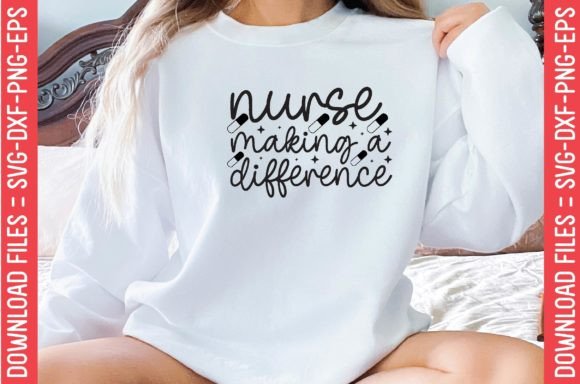
Nurse Making a Difference
A Designer’s First Glance: Warm, Clear, and Purposeful
When I opened the Nurse Making a Difference design for the first time, I didn’t see just another healthcare-themed graphic—I saw a quiet moment of intention. The composition is balanced but not stiff: a stylized nurse figure stands slightly angled, hands gently cradling a heart or perhaps a small child’s head—details are clean, symbolic rather than literal. There’s no cluttered background, no overwrought medical iconography. Just warmth, dignity, and approachability. That matters deeply when you’re translating a digital embroidery file into a finished product people will wear, gift, or display with pride.
Where This Design Truly Shines (and Why)
I recently prepped Nurse Making a Difference for a custom embroidered tote bag order—a gift for a nursing grad’s family. The design scaled beautifully to a 4” x 5” hoop size on medium-weight canvas. The lines held crispness in satin stitch for the outline and soft fill stitch for the figure’s silhouette. No feathering, no bleeding. On a natural linen tea towel? Equally strong—especially with high-contrast thread (navy on oat, charcoal on ivory). It’s the kind of machine embroidery design that reads clearly at arm’s length but rewards closer inspection: subtle curve in the nurse’s shoulder, gentle taper on the sleeve, open space around the central motif that lets fabric breathe.
This isn’t just a T-Shirt Designs staple—it’s a versatile embroidery file built for context. I’ve used it successfully on:
- Sweatshirt embroidery for hospital staff appreciation bundles
- Embroidered patch applications on denim aprons for clinic volunteers
- Baby embroidery on organic cotton onesies (scaled down to 2.75”, with light stabilizer)
- Personalized gifts like pillow covers for nurse retirees—stitched in tonal ecru thread for quiet elegance
- Holiday embroidery on kitchen towels gifted during Nurses Week
Where Caution Is Smart—Not Just Necessary
Like any thoughtful embroidery project, Nurse Making a Difference asks for intention—not magic. It’s not ideal for ultra-small hoops (<3”) without simplification: the fine detail in the hands and facial suggestion may collapse in dense fill stitch. On stretchy fabric like lightweight jersey tees, use cutaway + tear-away stabilizer combo—and test first. Thin fabrics (like baby swaddle muslin) need lighter density settings; dense stitch areas near the heart motif can pucker if overstabilized.
Dark fabric? Absolutely works—but check your PNG mockup against black backgrounds before stitching. Some light-gray vector elements may vanish unless you adjust thread colors deliberately. And curved surfaces—like caps—require repositioning the design to avoid distortion in the crown seam. I recommend using the SVG vector to rotate and mirror freely in your embroidery software before digitizing.
What It Adds to Your Finished Product—Beyond Aesthetics
This design quietly elevates perceived value. Customers don’t just buy “a nurse graphic”—they buy recognition, respect, emotional resonance. When stitched cleanly on a boutique sweatshirt or handmade product, Nurse Making a Difference signals care in both subject and execution. That builds trust: buyers feel seen, not marketed to. For Etsy sellers and small shop owners, it supports brand consistency across seasonal collections—pair it with minimalist typography or soft botanical accents, and it holds its own.
It also performs well in digital contexts. The included 300 dpi PNG with transparency makes printable mockups effortless—no jagged edges, no color shifts. Use it in social posts, listing banners, or email headers to reinforce your craft business voice. As a digital embroidery file, it’s compact, scalable, and compatible with standard workflows—no hidden layers or locked groups to untangle.
Practical Notes Every Embroidery Designer Should Run Through
Before stitching your first Nurse Making a Difference piece, do this:
- Test on scrap fabric—same weight and weave as your final product.
- Check thread color contrast early. Try black, navy, and heather gray on light fabric; cream and pale peach on dark.
- Review stitch density in your software—look for tight clusters near the heart and hands. Adjust if needed for your fabric type.
- Confirm hoop size matches your intended placement—especially for caps or curved seams.
- Inspect small details at 200% zoom: are inner curves clean? Does the PNG render cleanly in black-and-white mockups?
- Use proper stabilizer: medium cutaway for knits, lightweight tear-away for stable wovens.
- Verify licensing before selling finished items or bundling the file digitally—this is critical for commercial embroidery and Etsy sellers.
Final Thought: A Design That Serves Its People
Nurse Making a Difference doesn’t shout. It doesn’t rely on clichés or excessive detail. It’s a calm, confident design asset—one that respects the wearer, the maker, and the moment. Whether you’re stitching a personalized gift, building a craft business collection, or creating small shop merchandise for healthcare workers, this embroidery file delivers clarity, warmth, and quiet professionalism. It fits where empathy meets execution—and that’s exactly where the best handmade product lives.